Showing posts with label Arquitectura I Architecture. Show all posts

Friday, 16 January 2015

"Not art but communism"

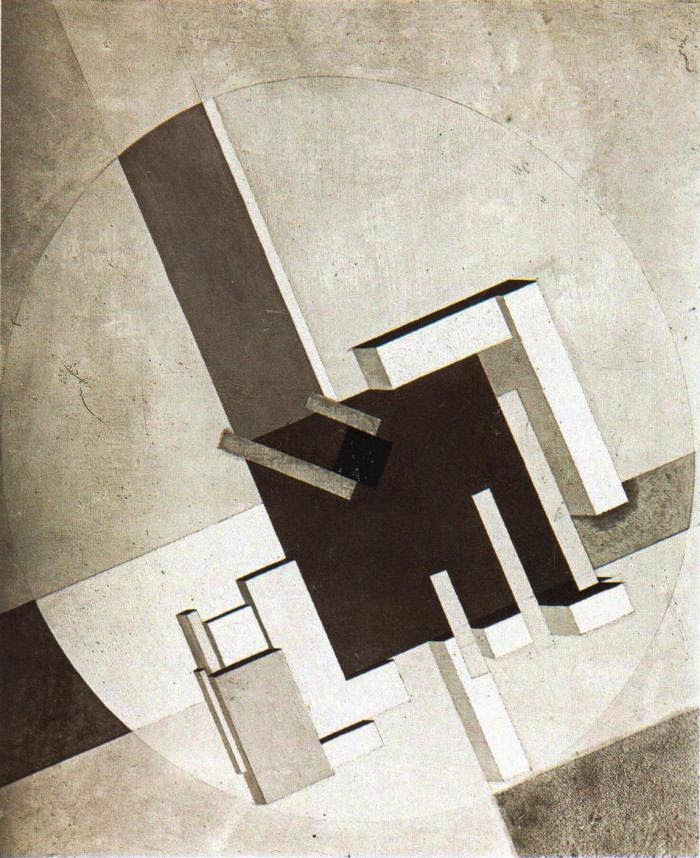
Not art but communism_ The Charnell House


"(...) Objet will take the part of constructive art, whose task is not to adorn life but to organize it. (...)
There will be no philosophical orientation in Objet, or any elegant frivolities. Objet is a matter-of-fact organ, a herald of technique, a price list for new “objects” and a sketch for objects that have not yet been made. (...)An end to all declarations and counterdeclarations!
Make «Objects»."
El Lissitsky In "Vetsch", 1922

PT_
Um agradecimento a Tiago Azevedo por este contributo para a Imaterial.

EN_
Thanks to Tiago Azevedo for this contribution to Imaterial.


Tiago Azevedo on Behance
Tiago Azevedo - "Architectural Manipulation"

___________________________________________
pt_
Caso não seja possível comentar o post através da caixa de comentários, por favor envie o seu contributo para imaterialarquitectura@hotmail.com
Deste modo, ele será acrescentado ao post-base, integrando todos os seus elementos multimedia (imagens, videos, etc).
en_
In the event of problems using the comment box, please send your contribution to imaterialarquitectura@hotmail.com 
It can then be added to the initial post, including all its multimedia elements (images, videos, etc).


Tuesday, 7 October 2014

Nip/Tuck City: Um tímido Manifesto I Nip/Tuck City: A timid Manifesto


PARA Project - "Lifting Mies: A post-Fordist nip-and-tuck rejuvenates the aging prom-queen"


PT_

"Cirurgia:
- Especialidade que se dedica ao tratamento de doenças e de traumatismos por meio de uma intervenção manual ou instrumental no corpo do paciente." 1
 

O conceito que eventualmente melhor define o nascimento e crescimento das cidades é o de "adição". Quer se tratem de cidades "orgânicas" (não serão todas, de uma maneira ou de outra?), ou "planeadas", nascem por uma adição sucessiva de elementos, aglomeram construção e significado, aumentam, melhoram, somam. E tenderão a fazê-lo exponencialmente.
O "menos é Mais" expirou. O "Mais" reina.

No entanto, o processo de crescimento e extensão das cidades não elimina imediatamente aquilo que já existe. O "antigo" permanece, enquanto o "novo" não surge.

O que fazer, então?
O "Mais", puro, é uma opção. Demolir o antigo, substituindo pelo novo.
Outra opção será abraçar essa realidade que existe expectante, enquanto o novo não surge. E normalmente isso relaciona-se de modo mais directo com a escala e ritmo humanos, com o quotidiano, com a razoabilidade da adaptação, esse processo que contradiz a "vertigem do El Dorado", onde tudo é novo, melhor, e onde é supérfluo pesar o valor comparativo das coisas, pois a decisão está tomada à partida: "Mais!"

A tensão entre a realidade física e as imagens idealizadas motivam a mudança. Nas cidades, assim como nas pessoas.
Numa cirurgia estética, o "Mais" surge da relação entre adição e subtracção ("tiro de um lado, ponho do outro"...), numa tentativa de fazer corresponder a realidade física à imagem que o paciente idealizou para si próprio, à sua aspiração. Do mesmo modo, a cidade contemporânea deveria adoptar esta atitude cirúrgica. Não na procura de satisfazer megalomanias, mas no sentido de melhorar o expectante, ou o "antigo".

Pequenas alterações, multiplicadas, replicadas, na procura da ordem ou da correspondência entre a vida quotidiana e o rosto das cidades.


EN_

"Surgery:
- The treatment of injuries or disorders of the body by incision or manipulation, especially with instruments."2

The concept which eventually best defines the birth and growth of cities is that of "addition". Both in the case of "organic" cities (aren't they all so, one way or another?), or "planned" ones, they are born from a successive addition of elements, they cluster construction and meaning, they enlarge, improve, sum. And they will tend to do so exponentially.
"Less is More" has expired. "Plus" rules.

However, the process of growth and extension of cities does not immediately eliminate what already exists. The "old" lasts, while the "new" doesn't emerge.

What to do, then?
The pure "Plus" is one option. Demolishing the old, replacing it by the new.
Another option is to embrace the existing expectant reality, while the new doesn't come. And normally this relates more directly to human rhythm and scale, with daily life, with the reasonableness of adaptation, the process which contradicts the "vertigo of El Dorado", where everything is new and better and one doesn't have to weigh the comparative value of things, because the decision is already made from the start: "Plus!"

The tension between physical reality and idealized images motivate change. In cities, as well as in people.
In plastic surgery, this "Plus" comes out of the relationship between addition and subtraction ("I remove from one spot, to place in another"...), in an attempt to match the physical reality with the image created by the patient, the aspiration. In the same way, the contemporary city should adopt this surgical attitude. Not pursuing megalomania, but rather towards improving its expectant or "old" elements.

Small alterations, multiplied, replicated, in the quest for order or the correspondence between daily life and the face of cities.


1 - Definição por www.infopedia.pt (Porto Editora)
2 - Definition by www.oxforddictionaries.com (Oxford Dictionaries)
___________________________________________
pt_
Caso não seja possível comentar o post através da caixa de comentários, por favor envie o seu contributo para imaterialarquitectura@hotmail.com
Deste modo, ele será acrescentado ao post-base, integrando todos os seus elementos multimedia (imagens, videos, etc).
en_
In the event of problems using the comment box, please send your contribution to imaterialarquitectura@hotmail.com 
It can then be added to the initial post, including all its multimedia elements (images, videos, etc).

Saturday, 17 May 2014

Re-act Corujeira! - Dédalo Magazine Workshop Follow Up - May 15th 2014

PT_

Dédalo Re-Act, a continuação!


EN_
Dédalo Re-Act, the follow-up!


___________________________________________
pt_
Caso não seja possível comentar o post através da caixa de comentários, por favor envie o seu contributo para imaterialarquitectura@hotmail.com
Deste modo, ele será acrescentado ao post-base, integrando todos os seus elementos multimedia (imagens, videos, etc).
en_
In the event of problems using the comment box, please send your contribution to imaterialarquitectura@hotmail.com 
It can then be added to the initial post, including all its multimedia elements (images, videos, etc).

Friday, 2 May 2014

A crise e os "fundamentos" I The crisis and the "fundamentals"

1 - Scandal of Europe's 11m empty homes - The Guardian

2 - Há cada vez mais sem-abrigo num país com um milhão de casas vazias - Público

PT_

Soundbyte: O panorama arquitectónico na Europa parece marcado pelas diferenças diametrais entre"quem pode" e "quem não pode, mas sabe".

Na visão de um português que pense sobre as cidades do seu país, que de uma maneira geral lutam contra a degradação física dos seus edifícios e tentam arranjar factores diferenciais que as tornem atractivas (mais ou menos gentrificadas, mais ou menos pontuais), uma associação facilmente surge: muitos e bons arquitectos, pouca arquitectura posta em prática. Os motivos económicos são conhecidos e, como tal, torna-se importante pensar em exemplos de projectos que sigam a máxima de Josef Albers, "minimal means, maximum effects".

EN_

Soundbyte: The architectural panorama in Europe seems to be defined by the diammetrical differences between "those who can" and "those who cannot, but know how".

From the perspective of a portuguese who thinks about Portugal's cities, which in general struggle against physical degradation and try to come up with differential factors which make them more attractive (more or less gentrified, more or less isolated), one association easily emerges: many and good architects, very little architecture put into practice. The economic reasons are well known, so it is important to think about examples of projects that follow Josef Albers' motto, "minimal means, maximum effects".


Gaiurb - Urbanismo e Habitação - Vila d’Este, Gaia


Hawkins/Brown with Studio Egret West – Park Hill, Sheffield

 
___________________________________________
pt_
Caso não seja possível comentar o post através da caixa de comentários, por favor envie o seu contributo para imaterialarquitectura@hotmail.com
Deste modo, ele será acrescentado ao post-base, integrando todos os seus elementos multimedia (imagens, videos, etc).
en_
In the event of problems using the comment box, please send your contribution to imaterialarquitectura@hotmail.com 
It can then be added to the initial post, including all its multimedia elements (images, videos, etc).


Monday, 16 December 2013

Utopia - Realidade I Utopia - Reality


http://www.cracktwo.com/2011/04/25-abandoned-soviet-monuments-that-look.html

Um agradecimento a Rui Oliveira por este contributo enviado para a Imaterial.
Thanks to Rui Oliveira for this contribution sent to Imaterial.
Rui Oliveira on Linked In


PT_
Um registo fotográfico de edifícios singulares da experiência socialista europeu. A utopia e a técnica representadas na arquitectura.

EN_
A photographic record of unique buildings of the european socialist experiment. Utopia and technique represented on architecture.

___________________________________________
pt_
Caso não seja possível comentar o post através da caixa de comentários, por favor envie o seu contributo para imaterialarquitectura@hotmail.com
Deste modo, ele será acrescentado ao post-base, integrando todos os seus elementos multimedia (imagens, videos, etc).
en_
In the event of problems using the comment box, please send your contribution to imaterialarquitectura@hotmail.com 
It can then be added to the initial post, including all its multimedia elements (images, videos, etc).

Saturday, 30 November 2013

"Architectural deception"


1 - OMA’s Winning “The Plaza at Santa Monica” Entry
2 - Digital Deception
3 - Álvaro Siza - Expo '98 Portugal Pavilion


PT_
Três links retirados do infinito mundo da Internet.
O primeiro mostra imagens de concurso de arquitectura, típicas, genéricas (peço desculpa pela punhalada, Rem, mas no caso a expressão tem mesmo um cunho negativo).
O segundo apresenta imagens de edifícios inexistentes, manipuladas até à dúvida fundamental que o fotorrealismo introduz - será verdade ou não?
O terceiro mostra como a imagem de arquitectura pode transformar um edifício que já existe num render de concurso, como o primeiro exemplo.

O tema é recorrente no âmbito do actual pensamento sobre arquitectura: as imagens, a sua abundância e poder manipulativo. Nada de novo, portanto. No entanto, é interessante apontar que o tema tem uma particular e renovada pujança, que deriva da origem dos novos textos que sobre ele se debruçam.

O cepticismo e a resistência à "cultura da imagem", ou à cultura da representação da arquitectura como factor cuja prioridade se sobrepõe à da arquitectura em si, não são estranhos aos meios académicos dos países "periféricos", nomeadamente Portugal. A abundância raramente é a norma nestes contextos, e os motivos que impulsionam o combate à hegemonia da imagem da arquitectura também não se verificam à mesma escala em Portugal ou nos Estados-Unidos, naturalmente.
O carácter cíclico destes processos críticos é natural, e estabelecer onde estes começam, recomeçam ou se extinguem é no mínimo polémico, normalmente tendencioso e não raramente impossível.

Mas não deixa de ser irónico, ainda que natural, que a pertinência do tema comece a ser alargadamente reconhecida no momento em que atinge o seu ponto de saturação não nos locais periféricos mas sim nos contextos economicamente centrais. O mediatismo da renovada corrente de pensamento que questiona a prioridade da imagem sobre o conteúdo (ou as consequências que isso tem no ensino da arquitectura e na sua qualidade, como no caso específico do Reino-Unido, em que essa preocupação está na ordem do dia) advém dessa saturação, desse beco fechado em que a novidade (ou a "reinvenção") se afigura habitual e viciosamente como caminho único para fazer a "máquina" avançar.

A "descrição como nova excentricidade" (um tipo de designação gentrificada típica do mundo da moda ou das artes em período de crise de identidade), está portanto a chegar, com pompa e autoridade.

Mas não esteve sempre presente?


EN_
Three links from the infinite world of Internet.
The first one shows images from an architectural competition, typical, generic (I'm sorry for this stab, Rem, but in this case the expression has indeed a negative connotation).
The second presents images from non-existing buildings, manipulated until the fundamental doubt introduced by photorealism - is it true or not?
The third one shows how image in architecture can transform an existing building into a competition render, as in the first example.

The theme is recurrent in today's field of architectural thinking: images, their abundance and manipulative power. Nothing new, then. However, it is interesting to notice the subject is gaining a particular and renewed momentum, due to the origin of the texts about it.

The skepticism and resistance to the "culture of image", or the culture in which the representation of architecture is often more important than architecture itself, is not at all foreign to the academic field within "peripheral" countries, namely Portugal. Abundance is rarely the norm in these contexts, and the reasons which fire up the combat against the hegemony of architectural image naturally don't occur in the same scale, for example, in Portugal or in the United States.
The cyclical character of these critical processes is natural, and establishing the point where they start, restart or extinguish is at least controversial, usually biased and often impossible.

But it is ironic, although natural, that the pertinence of this subject gains widespread recognition as it reaches its saturation point not in peripheral places but in economically central contexts. The media attention of the renewed current of thought which questions the priority of image over content (or the consequences in architectural education and its quality, for example in the U.K., where this matter is on the agenda) comes from this saturation, from this closed alley where novelty (or "reinvention") is the habitual and vicious way to make the "machine" move forward.

The "discretion as new eccentricity" (a type of gentrified denomination typical of the world of fashion or the arts in a period of identity crisis) is, therefore, being ushered in, with pomp and authority.

But wasn't it always present?


Image sources from the mentioned links.
___________________________________________
pt_
Caso não seja possível comentar o post através da caixa de comentários, por favor envie o seu contributo para imaterialarquitectura@hotmail.com
Deste modo, ele será acrescentado ao post-base, integrando todos os seus elementos multimedia (imagens, videos, etc).
en_
In the event of problems using the comment box, please send your contribution to imaterialarquitectura@hotmail.com 
It can then be added to the initial post, including all its multimedia elements (images, videos, etc).
___________________________________________

 
Parabéns ao ImaterialArquitectura pela abertura e clareza com que aborda este tema tão polémico e actual. De facto, torna-se difícil discernir o que é a "causa" e o "efeito" nesta matéria, entre o fascínio pela imagem e a conjuntura económica.

Particularmente pertinente é o resultado desta combinação: uma produção arquitectónica materializada em cartazes fantasiosos tanto quanto aos edifícios ilustrados, como à possibilidade de serem efectivamente construídos.

Cumprimentos cordiais,
playtimeplace
 

Saturday, 21 September 2013

The Glasgow Renaissance - Registando marés I Recording tides

"A long term photography and multimedia project that is documents the city of Glasgow as it undergoes a widescale regeneration project. A project by photographer, filmmaker, visual artist and Glaswegian, Chris Leslie"

www.glasgow-renaissance.co.uk

PT_
The Glasgow Renaissance, um projecto de documentação, registo e memória, que relembra que os processos de regeneração urbana a grande escala são multilaterais e multidimensionais.

A presença de uma progressão cronológica, a ideia de catalogação metódica de zonas e o foco na dimensão cultural destes processos (dimensão humana, em última análise) tornam este projecto uma ferramenta potencialmente importante para pensar as cidades e sua história.


EN_
The Glasgow Renaissance, a project of documentation, recording and memory, reminding that the processes of large-scale urban regeneration are multilateral and multidimensional.

The presence of a chronological progression, the idea of methodical catalogation of zones and the focus on the cultural dimension of these endeavours (the human dimension, ultimately) make this project a potentially important tool for thinking about cities and their history.

___________________________________________
pt_
Caso não seja possível comentar o post através da caixa de comentários, por favor envie o seu contributo para imaterialarquitectura@hotmail.com
Deste modo, ele será acrescentado ao post-base, integrando todos os seus elementos multimedia (imagens, videos, etc).
en_
In the event of problems using the comment box, please send your contribution to imaterialarquitectura@hotmail.com 
It can then be added to the initial post, including all its multimedia elements (images, videos, etc).


Friday, 16 August 2013

A arquitectura é uma nuvem. I Architecture is a cloud.


PT_
A metáfora proposta por Fujimoto é adequada ao propósito dos pavilhões da Serpentine Gallery, é poética e intelectualmente estimulante. A ideia de nuvem como algo eterno, mas simultaneamente efémero, passageiro, não é gratuita nem caricatural. Por um lado, aquilo que é pano de fundo, monotonia, repetição e indistinção num conjunto; por outro lado, a singularidade, o deleite do único, o prazer do que muda em frente aos nossos olhos. 

Quantos de nós já olharam o céu por tempo incontável, dedicado "àquela" nuvem, tão especial, como todas as outras? Quantos de nós farão exactamente o mesmo amanhã?

A arquitectura é isso.


EN_
The metaphor proposed by Fujimoto is adequate to the purpose of the Serpentine Gallery pavilions, it is poetically and intellectually stimulating. The idea of the cloud as something eternal, but simultaneously ephemeral, temporary, is neither gratuitous nor a caricature. On the one hand, the background, the monotony, repetition and indistinctness within an aggregate; on the other, the singularity, the delight of the unique, the pleasure of what changes in front of our eyes.

How many of us have looked at the sky for countless time, dedicated to "that" cloud, so special, as all the others? How many of us will do the exact same thing tomorrow?

Architecture is just that.

___________________________________________
pt_
Caso não seja possível comentar o post através da caixa de comentários, por favor envie o seu contributo para imaterialarquitectura@hotmail.com
Deste modo, ele será acrescentado ao post-base, integrando todos os seus elementos multimedia (imagens, videos, etc).
en_
In the event of problems using the comment box, please send your contribution to imaterialarquitectura@hotmail.com 
It can then be added to the initial post, including all its multimedia elements (images, videos, etc).

Monday, 12 August 2013

Hiroshi Sugimoto on Memory


PT_
Um vídeo cuidado, tranquilo e "nutritivo". O tempo e o olhar como elementos fundamentais, e muito subvalorizados.

EN_
A careful, quiet and "nourishing" video. Time and gaze as fundamental, and very underrated, elements.

___________________________________________
pt_
Caso não seja possível comentar o post através da caixa de comentários, por favor envie o seu contributo para imaterialarquitectura@hotmail.com
Deste modo, ele será acrescentado ao post-base, integrando todos os seus elementos multimedia (imagens, videos, etc).
en_
In the event of problems using the comment box, please send your contribution to imaterialarquitectura@hotmail.com 
It can then be added to the initial post, including all its multimedia elements (images, videos, etc).

Monday, 5 August 2013

The Rain Room - rAndom International

Rain Room at the Barbican, 2012 from rAndom International on Vimeo.

Site oficial
Official website:
rAndom International


___________________________________________
pt_
Caso não seja possível comentar o post através da caixa de comentários, por favor envie o seu contributo para imaterialarquitectura@hotmail.com
Deste modo, ele será acrescentado ao post-base, integrando todos os seus elementos multimedia (imagens, videos, etc).
en_
In the event of problems using the comment box, please send your contribution to imaterialarquitectura@hotmail.com
It can then be added to the initial post, including all its multimedia elements (images, videos, etc).

Saturday, 29 June 2013

Re-act Corujeira - Dédalo Magazine Workshop


Re-act Corujeira - Dédalo Magazine Workshop - with Failed Architecture (NL) and Bernardo Amaral (PT)

PT_

O workshop organizado pela revista Dédalo pretendia desenvolver propostas para solucionar questões urbanas e sociais na zona de Campanhã, Porto. Esta área da cidade está fisicamente isolada e tem problemas de segregação social e falta de comunicação entre comunidades. Tendo como ponto de partida as contribuições, sugestões e desejos dos habitantes da zona, cada grupo desenvolveu propostas ou estratégias  que pudessem ser implementadas com a participação local, de modo viável e prolongado.


EN_

The workshop organised by Dédalo Magazine aimed at developing proposals that could solve urban and social issues in Campanhã neighbourhood, Porto. This area of the city struggles with physical isolation, social segregation and lack of communication between social groups. Starting from the contributions, suggestions and desires of the people living in the area, the groups developed proposals  or strategies which could be implemented with the participation of the community, in a viable and long-lasting way.

___________________________________________
pt_
Caso não seja possível comentar o post através da caixa de comentários, por favor envie o seu contributo para imaterialarquitectura@hotmail.com
Deste modo, ele será acrescentado ao post-base, integrando todos os seus elementos multimedia (imagens, videos, etc).
en_
In the event of problems using the comment box, please send your contribution to imaterialarquitectura@hotmail.com 
It can then be added to the initial post, including all its multimedia elements (images, videos, etc).

Saturday, 22 June 2013

Por uma arquitectura espontânea I Towards a spontaneous architecture


Playhouse / La Casita - Anna & Eugeni Bach

PT_

"Fazer arquitectura vem de uma vontade interior, antes de tudo"*

"Espontâneo" como sinónimo de necessário e motivado pela vontade de experimentação de temas e formas a uma escala não necessariamente institucional ou afastada da humana.

EN_

"Producing architecture comes from an inner will, first of all"*
"Spontaneous" as a synonym  of necessary and driven by the will to experiment with themes and forms in a scale which is not necessarily institutional or distant from the human one.

*Sofia von Ellrichausen (Pezo von Ellrichausen)

___________________________________________
pt_
Caso não seja possível comentar o post através da caixa de comentários, por favor envie o seu contributo para imaterialarquitectura@hotmail.com
Deste modo, ele será acrescentado ao post-base, integrando todos os seus elementos multimedia (imagens, videos, etc).
en_
In the event of problems using the comment box, please send your contribution to imaterialarquitectura@hotmail.com 
It can then be added to the initial post, including all its multimedia elements (images, videos, etc).


Wednesday, 19 June 2013

James Turrell: "We create the reality we live in"


PT_
Percepção, sugestão, espaço intersticial. Como numa fotografia, o valor do sugerido é frequentemente maior do que o imediatamente visível. A acção imaginada, ou criada, pelo observador é a acção real, ainda que possa não ser, na realidade.

EN_

Perception, suggestion, interstitial space. As with a photograph, the value of what is suggested is frequently greater than what is immediately visble.  The action imagined or created by the observer
 is the real action, although it may not be, in reality.


Friday, 19 April 2013

"Du Plateau Beaubourg au Centre Georges Pompidou", C.G.P.; ed. 1987


"Du Plateau Beaubourg au Centre Georges Pompidou", C.G.P.; ed. 1987
___________________________________________
pt_
Caso não seja possível comentar o post através da caixa de comentários, por favor envie o seu contributo para imaterialarquitectura@hotmail.com
Deste modo, ele será acrescentado ao post-base, integrando todos os seus elementos multimedia (imagens, videos, etc).
en_
In the event of problems using the comment box, please send your contribution to imaterialarquitectura@hotmail.com
It can then be added to the initial post, including all its multimedia elements (images, videos, etc).

Tuesday, 7 August 2012

Legitimação da arquitectura I Legitimisation of architecture


PT_ 
1 - Legitimação da arquitectura:

O que é que um vídeo com pessoas dançando surpreendemente no quotidiano metropolitano de uma cidade, na visão "Fritzlangiana" do termo Metropolis, tem a ver com a validação a priori ou a posteriori de um projecto de arquitectura? Aparentemente, nada... (note-se que o "aparentemente" só fortalece o carácter polémico e visionário de tudo o que se seguirá, e que as reticências aumentam as expectativas, toda a gente sabe).

(nota mental do redactor: "Ena! Intercalar referências cinematográficas eruditas e em tons de cinza, ainda que tão repetidas que de alternativas tenham já pouco, com dúvidas linguísticas e prováveis erros ao arriscar cunhar um termo novo só acrescenta allure a uma mensagem pseudo - intelectual, confere-lhe aquele je ne sais quoi que só se verifica num daqueles encontros cósmicos entre uns óculos de massa, um penteado assimétrico comprado num cabeleireiro alternochic e uma toalha de mesa aos quadrados, muito colorida, onde pousa um pires de tremoço e um rádio que toca neo folk português)

2 - "Modern Utopia"

Cito Jing Liu e Florian Idenburg, arquitectos do atelier So- Il, na revista Mark #39 de Ago / Set 2012:

"... there will always be a gap between the intention and the execution of a project.But inconsistency is about that weekened modernitiy we´re talking about as well - the cracks in the foundation that we're focused on. It's impossible and even impractical to be consistent in the real world."

"... we´ve always felt that discomfort can be productive." 

"... I think the vacuum we face by having an office in Brooklyn allows us to explore rather than just produce."

"Within this uncertainty, I hope we can discover a new aesthetic, which isn´t about perfection, definition or certain control. We want to use uncertainty as an aesthetic impulse."

O que quer dizer isto, em relação ao anteriormente avançado? A ideia de que o desconforto possa ser produtivo e a recusa "metafórica" da perfeição estética, procurando, sim, o máximo de coerência entre campo conceptual explorado / proposto e proposta final constituem pontos de partida claros e fortes. Os dogmas linguísticos do Moderno estão, claramente, obsoletos (não há polémica nenhuma nesta última oração, o que por si só pode ser profundamente polémico). No entanto, permanecem nas fundações ideológicas de inúmeros arquitectos marcados pelos direitos adquiridos da disciplina da arquitectura, muitos deles cimentados ainda num ambiente académico que favorecia uma ligação às Belas - Artes, a cultura de um "Venustas" quase intemporal e a uma ideia de contribuição social da arquitectura que, em muitos casos se transformava num encerramento monástico e, diria, efectivamente anti-social na realidade actual. Ninguém nega a contribuição real que muita arquitectura, especialmente a habitacional, teve em alterações sociais a um nível primário; no entanto, o termo "social" aplicado à arquitectura actual deve ser entendido como relacionado com uma economia muitíssimo marcada pela comercialização de uma imagem de cruzamento disciplinar, de cooperação intelectual e de multi - referenciação; um brainstorming global e contínuo, no qual a arquitectura sai fortalecida quanto mais interligada estiver com todas as outras actividades, e não o contrário. 

3 - Lucky Luke é mais rápido que a própria sombra!

E quando a sombra é maior e melhor que nós, o que fazer?
O medo é um sentimento fundamental, que está na raiz dos mais surpreendentes êxitos. E o medo profundo da perda de influência no mundo da arquitectura em vias de extinção, esta que não admite que eu retire de um vídeo com pessoas a saltitar numa gare a "inspiração" que possibilitará a criação de um projecto efectivamente válido condena-a a minguar até desaparecer. 
Dêem-me diagramas em tons garridos! Dêem-me imagens manipuladas digitalmente até à náusea onde eu possa ver a Rainha de Inglaterra sentada numa cadeira de Niemeyer enquanto assiste ao "Portugal no Coração"!


EN_ 
1 – Legitimisation of architecture: 

What does a video with people dancing surprisingly on a metropolitan daily setting of a city, in the “Fritzlangean” view of the term Metroplis, has to do with an a priori or a posteriori validation of an architectural project? Apparently, nothing… (notice that this “apparently” only strengthens the polemical and visionary character of everything that will follow, and the reticence enhance the expectation, everybody knows).
(Author’s mental note: “Wow! Balancing erudite cinema references in shades of grey, even if they are so overused they are no longer very alternative, with linguistic doubts and probable errors trying to invent a new term that only adds allure to a pseudo-intellectual message, gives it that je ne sais quoi that only happens in one of those cosmic meetings between thick frame glasses, an asymmetrical hairdo bought at an alternative-chic salon and a colorful checkered table cloth, where a plate of lupin beans lays and a radio plays Portuguese folk). 

2 - "Modern Utopia" 
I quote Jing Liu and Florian Idenburg, architects at atelier So- Il, on Mark magazine #39 (Aug / Set 2012):

"... there will always be a gap between the intention and the execution of a project. But inconsistency is about that weakened modernity we´re talking about as well - the cracks in the foundation that we're focused on. It's impossible and even impractical to be consistent in the real world."

"... we´ve always felt that discomfort can be productive."

"... I think the vacuum we face by having an office in Brooklyn allows us to explore rather than just produce."

"Within this uncertainty, I hope we can discover a new aesthetic, which isn´t about perfection, definition or certain control. We want to use uncertainty as an aesthetic impulse." 

What does this mean, in relation with was written before? The idea that discomfort can be productive and the “metaphorical” refusal of aesthetic perfection, searching instead for a maximum coherence between the explored / proposed conceptual field and the final proposal are clear and strong starting points. The linguistic dogmas of the Modern are, clearly, obsolete (no polemic in this statement, which in itself can be profoundly polemical). However, in the ideological foundations of several architects close to the acquired rights of the subject of architecture, many of them created in an academic environment which favoured the connection to Fine Arts, there still remains the culture of an almost timeless “Venustas” and the idea of social contribution of architecture which in many cases turned itself into monastic confinement which would be, I would argue, effectively anti-social in the current reality. No-one denies the real contribution that architecture, especially residential, gave to social changes at a primary level; however, the term “social” applied to contemporary architecture must be understood as being related to an economy heavily related to the commercialization of an image of disciplinary crossing, of intellectual cooperation and multi-referencing; a global and continuous brainstorming, in which architecture is strengthened the more connected it is to all the other activities, and not the contrary.

3 - Lucky Luke is faster than his own shadow!

And what if the shadow is bigger and better than us, what to do?

Fear is a fundamental feeling, which is in the root of the most surprising achievements. And the deep fear of the loss of influence that this endangered architecture feels, this architecture that doesn’t allow me to use a video of people hopping up and down in a train station as the “inspiration” that will make the creation of an effectively valid project possible condemns it to shrink and until it disappears.

Give me diagrams in lavish colours! Give me images digitally manipulated ad nauseam where I can see the Queen of England seating on a Niemeyer chair while watching “Eastenders”! 


pt_
Caso não seja possível comentar o post através da caixa de comentários, por favor envie o seu contributo para imaterialarquitectura@hotmail.com
Deste modo, ele será acrescentado ao post-base, integrando todos os seus elementos multimedia (imagens, videos, etc). 
en_
In the event of problems using the comment box, please send your contribution to imaterialarquitectura@hotmail.com
It can then be added to the initial post, including all its multimedia elements (images, videos, etc).
____________________________________________________________________________________________________________________________________